
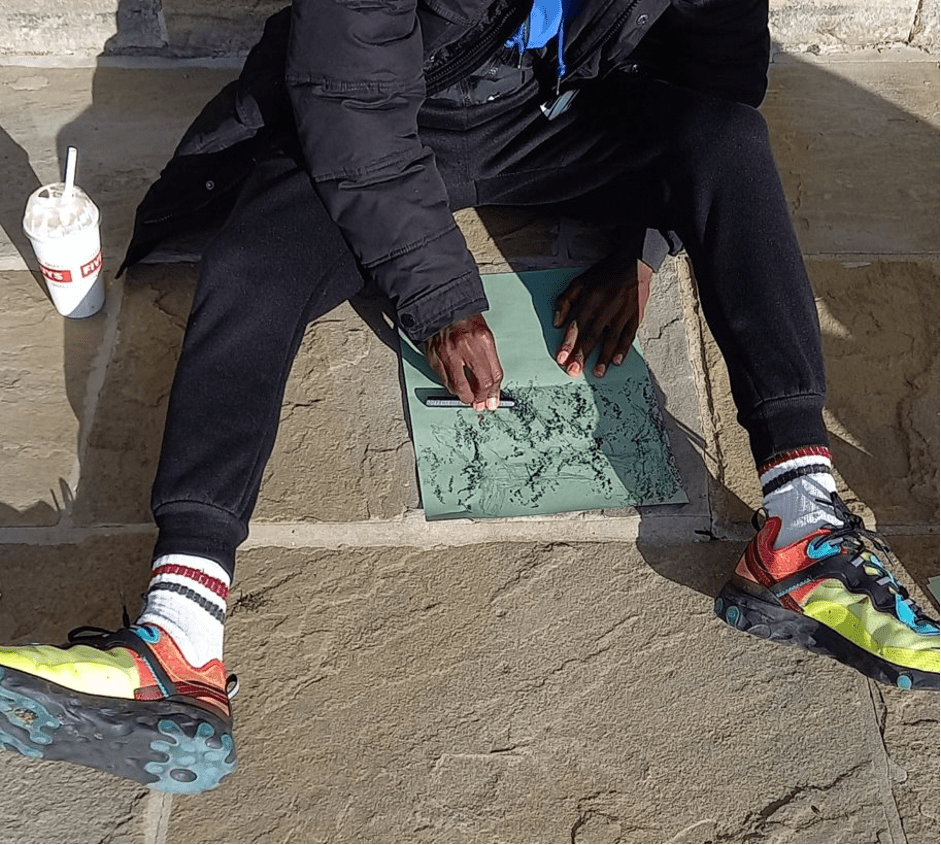
Forced displacement and young people
Following ‘the peak of the ‘migration crisis’ in 2016’, the scale of involuntary youth migration into Europe further increased in 2022, due to ongoing conflicts across the world and the invasion of Ukraine. This created challenges for both individual migrants and the communities they were moving into. Previous research conducted in Nottingham had shown migrants’ desire ‘to become full members of the social and cultural fabric of the city.’ (Pero, et al., 2008, p. 62). However, the reality is that most feel isolated and experience ‘non-belonging’ (ibid.). There is widespread concern with how this perceived isolation affects young people’s ability to enact their ‘right to the city’ (Lefebvre, 1968). Failure to integrate has profound implications for migrants and established communities in cities and increases risks of anti-social behaviours as well as risks to mental and physical wellness. Gendered identities and differences in attitudes toward gender relations are a particular point of tension (Valentova & Alieva, 2014).
The specific problem addressed by this project was:
how city leaders can lessen the impact of social isolation experienced by young people on forced migration journeys who have newly arrived in cities in different European contexts
Our approach
In Nottingham and Lund, there was an identified ‘problem- owner’ from each city council or municipality who regularly met with the project team to discuss our emerging findings. We worked closely with artists, those supporting refugee communities and municipal authorities, to better understand how to enable young new arrivals to build connections with their new place such that they can go on to lead lives of meaningful engagement in their city. In the context of a changing post-COVID-19 world, these issues become even more pressing.
UNESCO calls for cities to be inclusive, safe, resilient and sustainable (The United Nations Conference on Housing and Sustainable Urban Development, 2016). In 2015, Culture Ministers across Europe agreed that culture and the arts have a role to play in the process of integrating refugees into host societies (McGregor & Ragab, 2016, p. 5). These mandates are not yet fulfilled. The responsibility for realizing them falls to cities and community organizations. They have to develop strategies to facilitate modes and activities leading to higher levels of connection and belonging. The challenge is to do so in a planned and sustainable way given the conflicting demands on resources and the unpredictable nature of movement into the city by forced migrants. Working with arts and cultural organizations within these urban spaces offers a proven way of integrating disenfranchised groups. While forced migrants are unable to bring physical artefacts from their past with them, they can carry memories and associations of arts and cultural practices. Socially inclusive city arts institutions can powerfully utilize these.
They are also therapeutic and social spaces where past trauma can be safely explored. Art provides a connection to place, but also provides opportunities for social connections that enable the formation of a sense of community in a place. In so doing, participation in arts and cultural activities which acknowledge and build on the experiences and skills of the new arrivals acknowledges that through the arts, integration can become a two-way process between the incomer and the host community.
During the project, the concept of cultural citizenship emerged as an important counter to the complex bureaucratic processes our young participants were navigating as part of their lived experience of seeking legal citizenship.
 Art of Belonging