
Workshop Description
Pigments will be created using spices and natural materials and then used to paint a design inspired by a treasured object or remembered place.
Inspired by Madhubani painting from India and Bangladesh; colours found in nature; cultural or religious objects, houses and landscapes important to the participant.
Workshop Aims
- To learn how to turn common materials into pigments
- Create fabric squares decorated using the paints we make
- To celebrate an aspect of the participant’s heritage
Materials Required
- Selection of household or natural materials to extract colours from. For instance turmeric, beetroot, grass, clay, charcoal, or any other colourful fruits, plants, minerals or foods you can find
- Sieve
- Pestle and mortar
- Blender
- Pots or jars
- Paint brushes
- Plain fabric such as cotton or calico canvas cut into squares. Tape edges to a board to keep them flat and mask off a boarder
- Pencils
- Marker pens
Workshop Activities
- Assemble a range of foods, spices and natural materials to extract natural colours. We used turmeric, paprika, beetroot, grass, charcoal and terracotta clay. Work as a group to create paints from these materials. Some will be simply mixed with a little water (such as turmeric), others will need to be blended and squeezed through a sieve (such as grass) to extract the colour. Some will need to be crushed and ground (such as charcoal) before being mixed into water. To make the paints thicker you can also mix in some PVA glue.
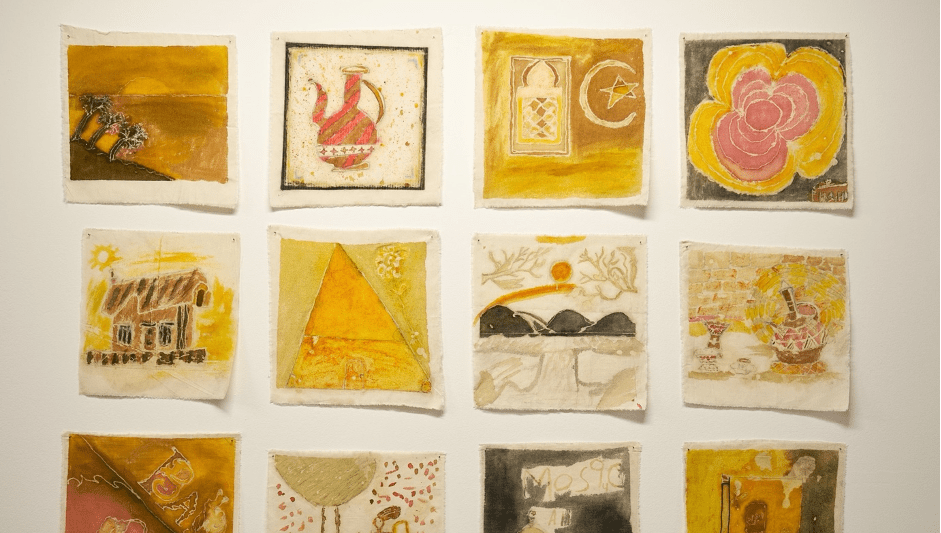
- Onto a square of fabric, sketch a design inspired by the participants cultural heritage. This could be a landscape, special object or building. Focus on a place or item the participant would like to celebrate and share with others about their culture, family or home.
- Go over the sketched lines to make them stand out. You could use a black marker for this – make sure it is permanent and will not run (see alternative below).
- Use the homemade paints and dyes to paint the fabric design. Notice the effects of different paints, some will be subtle and others more vibrant. They may have distinctive odours. They may change and fade over time too.
- Place all of the squares together in a grid to see what the group has produced collectively using the dyes. Invite anyone who feels comfortable to share what they have painted and why it is important to them.
We combined this technique with the batik process with great effect – see post on ‘Patterns in Batik’ for more details. We drew lines in hot wax and painted in between using the dyes.
During an earlier session we practiced making and using the paints and used them on small squares of tracing paper to add to a community window display.
This is inspired by the paints mixed in India and Bangladesh – East Bengal region – with a similar process of grinding and mixing to create pigments used in Madhubani painting. Highly decorative artworks are created depicting everyday scenes and animals, and religious imagery.
You can get really creative with the process and use whatever pigments are available to you to make paints; items in the cupboards such as tomato ketchup and coffee for instance. Some will fade or change colour over time. You could experiment with pigments and then revisit what is successful a week later before making final art works.
 Art of Belonging